KMUTNB is dedicated to supporting innovation and entrepreneurship that contribute to a sustainable and low-carbon future. Through its Startup Unit, the university provides a comprehensive range of services and programs to assist start-ups focused on low-carbon technologies, clean energy solutions, and sustainable business models. KMUTNB organizes innovation bootcamps, hackathons, and pitch challenges to encourage the creation of start-ups addressing issues such as renewable energy, energy efficiency, circular economy, and green materials. Selected teams receive seed funding, mentorship, and workspace support to further develop prototypes and scalable business models. In parallel, the university offers mentorship and expert matchmaking, connecting start-ups with academic and industry specialists who can advise on technical validation, regulatory compliance, and strategic market expansion within the green economy. To strengthen the development of low-carbon innovations, KMUTNB provides start-ups with access to research facilities, laboratories, and technical infrastructure. Entrepreneurs are able to collaborate with faculty and research centers in the development, testing, and demonstration of sustainable technologies, including renewable energy systems, digital energy management tools, and eco-efficient manufacturing processes. The university also conducts training workshops that build capacity in sustainable business practices, focusing on life-cycle assessment, carbon footprint reduction, and financing mechanisms for green technology ventures. In addition, KMUTNB operates a dedicated incubation and acceleration program for start-ups in the low-carbon sector. The program includes mentoring sessions, milestone evaluations, and investor engagement activities designed to help entrepreneurs refine their products and attract funding. Start-ups are also encouraged to form partnerships with industry to conduct pilot projects that demonstrate the impact of their solutions, such as energy-saving technologies, renewable integration, or waste-to-energy systems. To strengthen visibility and growth opportunities, KMUTNB regularly hosts networking events, investment readiness workshops, and demo days that connect start-ups with green investors, ESG funds, and government support schemes. The university also establishes an impact measurement framework to monitor the progress of supported start-ups, tracking their energy savings, carbon reduction, and overall sustainability contributions. Through these activities, KMUTNB continues to play a vital role in fostering innovation, empowering entrepreneurs, and advancing Thailand’s transition toward a low-carbon economy.
For example:
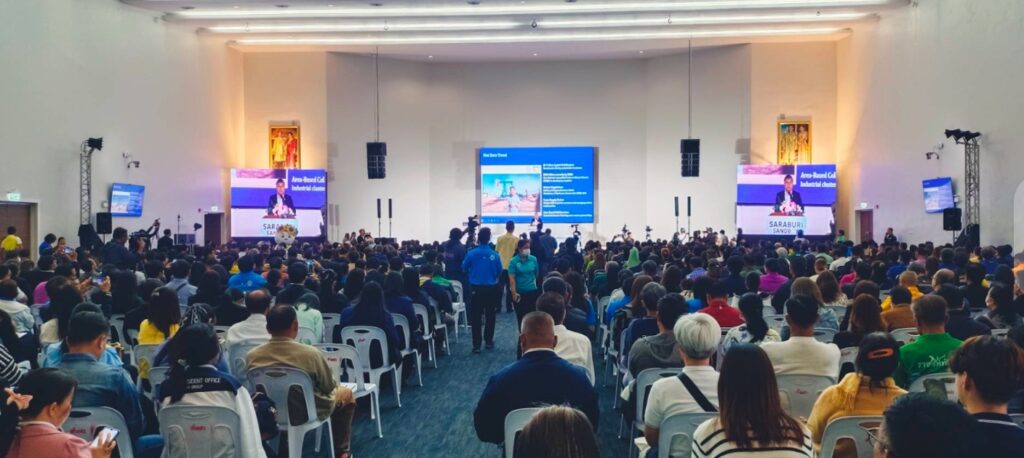
- KMUTNB News: “Saraburi Sandbox: United for Thailand’s First Low-Carbon City.” This project demonstrates KMUTNB’s active role in fostering a low-carbon economy by collaborating with local communities, government agencies, and industry partners to implement sustainable urban energy solutions.
Source: KMUTNB News