King Mongkut’s University of Technology North Bangkok (KMUTNB) has implemented a systematic approach to measure and monitor the use of low-carbon and renewable energy across all campuses. The university conducts annual energy audits to record electricity consumption from renewable sources, such as solar photovoltaic (PV) installations, and energy-efficient systems integrated into university buildings.
Digital monitoring systems are installed to collect real-time data on energy generation, usage, and carbon intensity. The data are analyzed to determine the proportion of total energy consumption derived from low-carbon sources compared to conventional grid electricity. Results are compiled into the university’s sustainability and carbon management reports to support continuous improvement and transparency.
Additionally, KMUTNB promotes the expansion of renewable energy infrastructure by installing additional rooftop solar panels and adopting energy-efficient technologies such as LED lighting and motion sensors. The tracking data are used to guide energy policy decisions and support the university’s long-term goal of achieving carbon neutrality.
For example:
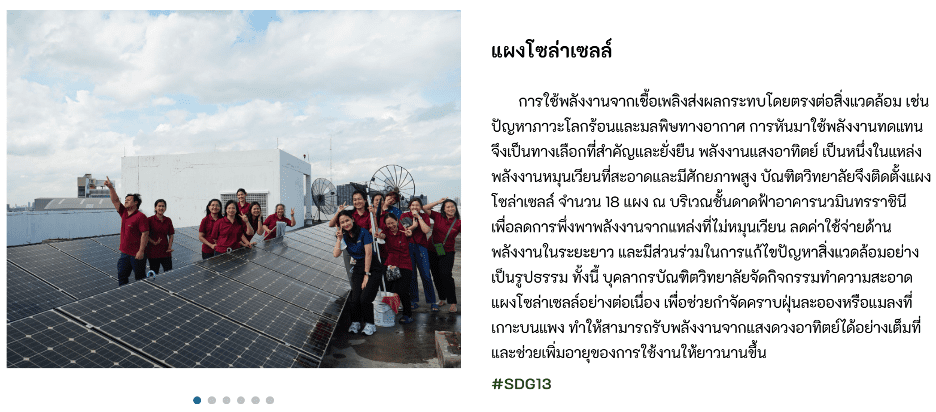
- The Graduate School has installed 18 solar panels on the rooftop of the Navamindra Queen Building to reduce reliance on non-renewable energy sources and lower long-term energy costs.