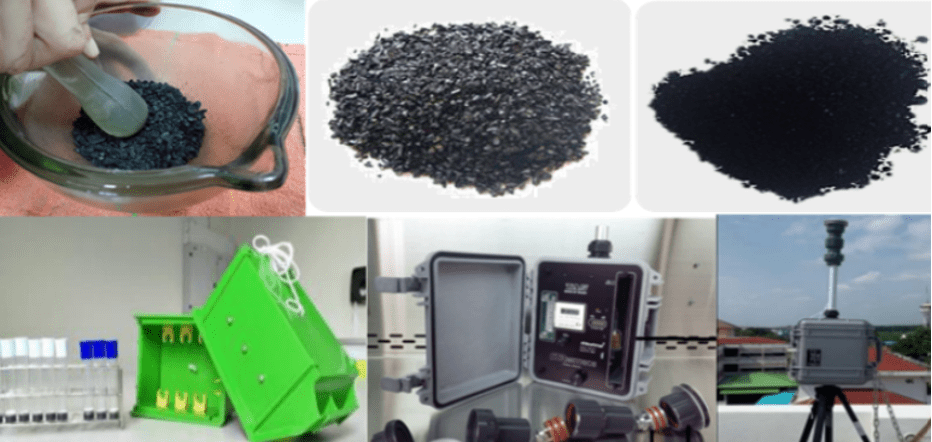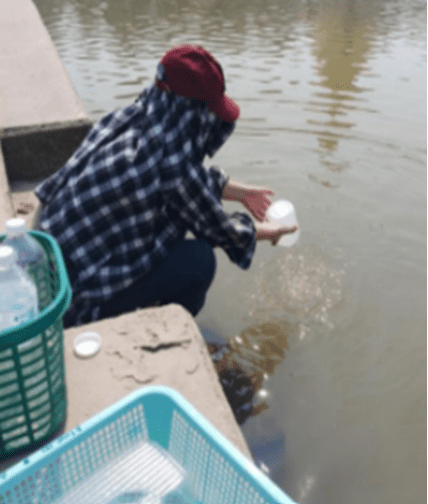
KMUTNB places strong emphasis on monitoring the health of aquatic ecosystems as a core component of its environmental stewardship. Through its Environment for Community and Industry Development Research Unit (ECID) (https://sciee.kmutnb.ac.th/res.php?r=5) under the Faculty of Science, Energy and Environment (Rayong campus), the university routinely conducts environmental monitoring activities—including chemical analyses of pollutants, microplastics measurement, and sediment assessments—to establish baseline data and track changes over time.
Building on this data-driven foundation, KMUTNB integrates these monitoring results into actionable research and management practices. The university uses collected information to identify emerging threats (such as microplastic accumulation in coastal sediments), inform remediation technologies (e.g., phytoremediation of mangrove sediments), and support decision-making for industry and community partners. In doing so, KMUTNB not only gauges the condition of aquatic ecosystems but also contributes practical solutions that help safeguard aquatic biodiversity, water quality, and the long-term resilience of the coastal and marine environments.