KMUTNB promotes landscape management that conserves water while maintaining a green and pleasant campus environment. The university will adopt water-conscious planting practices by prioritizing the use of native and drought-tolerant plant species that require minimal irrigation and are well-suited to local climatic conditions. Plant selection will focus on species that enhance biodiversity and reduce dependency on chemical fertilizers or excessive watering.
To optimize water use, efficient irrigation systems such as drip irrigation, soil moisture sensors, and timed sprinkler systems will be installed across campus gardens and green spaces. The university will implement rainwater harvesting and greywater reuse for irrigation to minimize the use of treated water. Mulching and soil improvement techniques will also be applied to retain soil moisture and reduce evaporation losses.
For example:
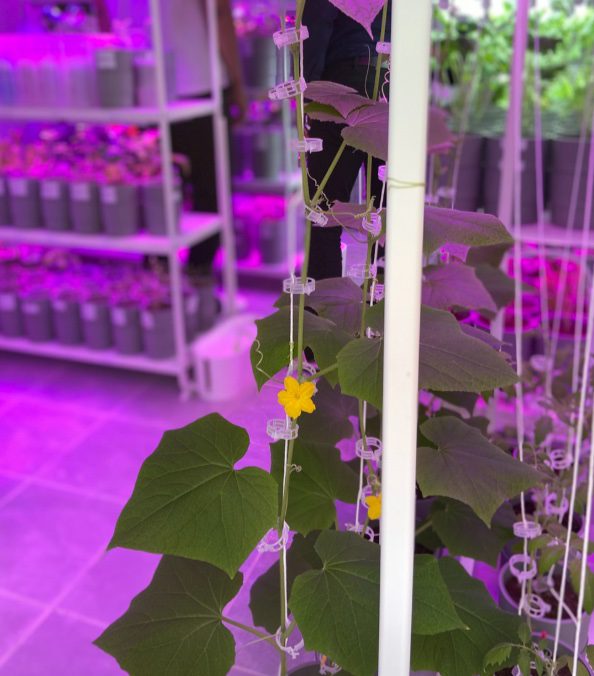
Associate Professor Wanchai Laemlaksakul, Head of the Research and Development Center for Cyber-Physical Production Systems at King Mongkut’s University of Technology North Bangkok (KMUTNB) and an ITAP expert of NSTDA, revealed that the National Science and Technology Development Agency (NSTDA) under the Ministry of Higher Education, Science, Research and Innovation (MHESI) is supporting entrepreneurs through the Innovation and Technology Assistance Program (ITAP) to develop indoor farming systems for growing organic vegetables and fruits inside apartment rooms.
Through the ITAP program, experts from KMUTNB collaborated with Loft Builder Co., Ltd., a construction contractor expanding into a new business line that integrates indoor farming or Plant Factory technology into apartment units in downtown Bangkok. The project aims to advance technology and innovation in plant factory systems, transforming a small 10-square-meter apartment room into a prototype space for cultivating various organic crops such as strawberries, kale, and cool-climate herbs like parsley and edible flowers, which can be blended into smoothies and consumed year-round.
This prototype also serves as a demonstration site for the company’s clients who are interested in implementing indoor farm systems and seeing the business model in practice. The organic vegetables and fruits grown in this system are high-value crops with premium market prices, while the investment in this technology remains affordable and accessible for farmers or interested individuals to adopt independently.