KMUTNB has established comprehensive Water Quality Standards and Discharge Guidelines to ensure that all wastewater generated from campus operations, laboratories, and industrial pilot facilities meets environmental and public health requirements before being released into natural water bodies or municipal systems. The policy aims to uphold water quality and protect surrounding ecosystems, wildlife, and community welfare in line with Thailand’s Pollution Control Department (PCD) regulations and international environmental standards.
Under this framework, all faculties and departments that discharge water, including the Faculty of Engineering, Faculty of Applied Science, and Faculty of Technical Education, are required to conduct regular water testing for parameters such as pH, biochemical oxygen demand (BOD), chemical oxygen demand (COD), suspended solids, heavy metals, and nutrient concentrations. Results are reported to the university’s Environmental and Safety Division for review and verification to ensure compliance.
Additionally, KMUTNB applies a “pollution prevention at source” approach by promoting clean production practices, installing pre-treatment systems in laboratories and workshops, and minimizing the use of hazardous chemicals. The university also integrates water discharge management into its Green University initiatives, linking research, education, and operational monitoring to reduce the environmental footprint.
Periodic audits and continuous improvement programs are implemented to identify potential risks of contamination and to develop innovative treatment technologies. Through strict adherence to these water quality standards, KMUTNB reaffirms its commitment to safeguarding aquatic environments, protecting biodiversity, and maintaining public health for current and future generations.
Published on 20 Feb 2024
For example:
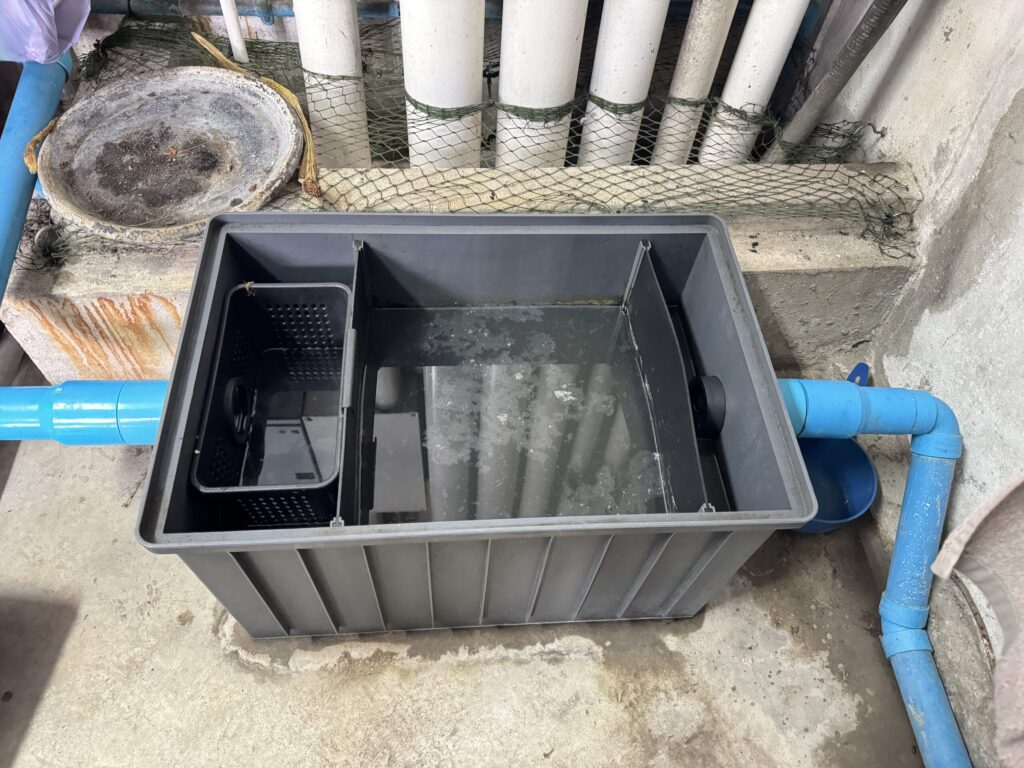
The Institute of Computer and Information Technology (ICIT) at KMUTNB implemented a grease trap installation project to improve wastewater treatment efficiency and reduce environmental impact from laboratory and canteen discharges. Source: ICIT KMUTNB – Grease Trap Installation for Wastewater Management